January 1st 2026 marks the 175th anniversary of the creation of Surrey Police.
Known formerly as Surrey Constabulary until 1993, the establishment of a single unitary Force for the county has evolved over its lifespan, enduring periods of restructuring, growth, boundary change and divide.
Between January and March, we’ll be sharing photos from the Surrey Police archive. This page will be updated with every new photo, so keep an eye out for our latest posts!
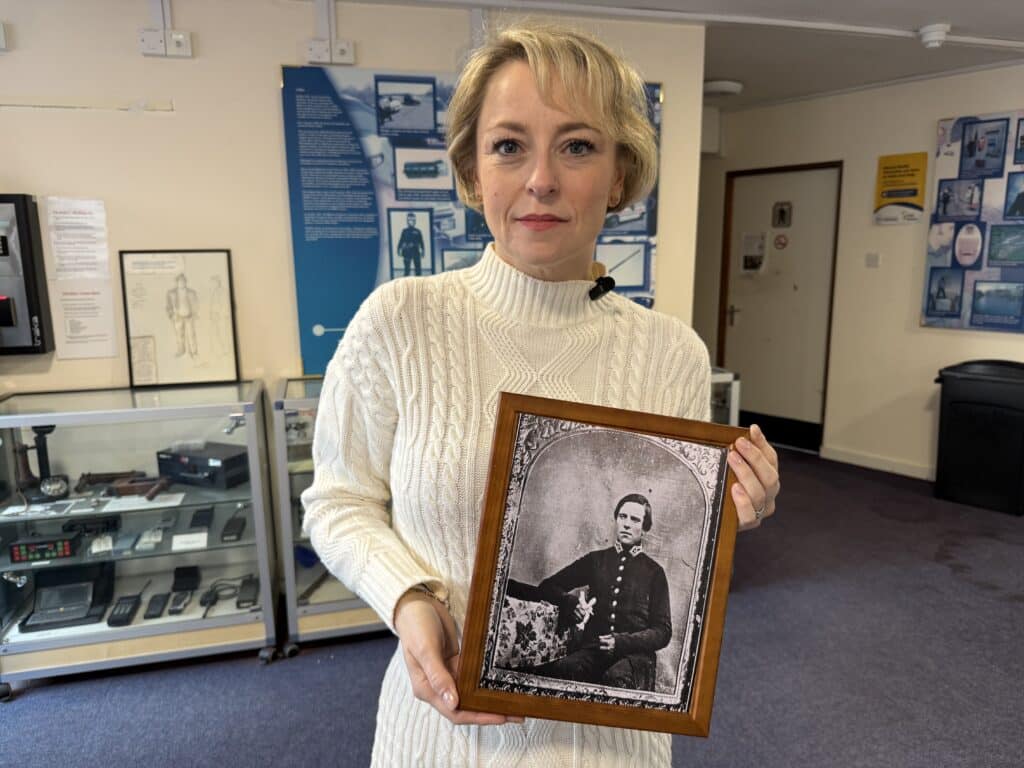
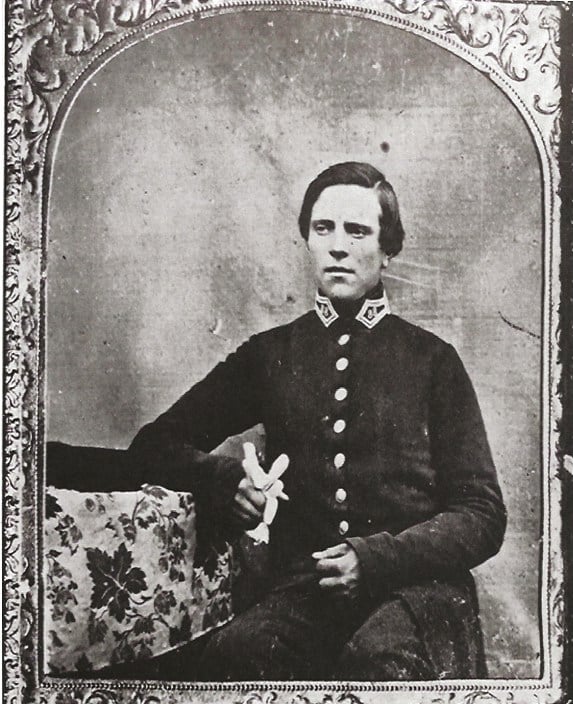
- Commissioner shares one of the first-known images of a serving Surrey Constabulary officer
- PC Charles Carpenter
- Captain Howard C Hastings
- The role of the Special Constable in history
- The Surrey puma
- Agatha Christie’s mysterious disappearance
- Surrey Police dog training school
- Surrey Police handcuffs through the ages
- When Surrey’s trailblazing Chief Constable met the Prime Minister
- Surrey’s first female inspector
- The evolution of personal radio comms
- Surrey Police transport over the decades
Origins of Surrey Constabulary
Founded in 1851, Surrey Constabulary originated with only seventy police officers and five superintendents – a world away from its current workforce today of over 4,000 people.
Its formation came at a time of rising fear in the county where a group of violent criminals known as the ‘Isaacs Gang’ terrorised the areas of Surrey and Sussex throughout the 1840s.
The murder of clergyman Reverend Hollest at his home in Frimley in 1850 caused significant public alarm and has been viewed as the catalyst in bringing together formal organised policing in the county.
The first Chief Constable of Surrey Constabulary was Captain Hastings, who served in post for almost 50 years.
‘Honest and sober’ candidates sought
He had a difficult job recruiting appropriate candidates for the Force, demanding that officers should be ‘honest and sober’, under 30 years old and at least 5’ 7” tall!
There was no minimum age limit to join, with the youngest constable recorded starting at 14 years of age.
The Metropolitan Police, established in 1829 by Sir Robert Peel, had become the model for other Forces throughout the country.
Its success led to the Municipal Corporations Act of 1835 which permitted cities and boroughs to form their own police forces.
Formation of a single unitary Force
Guildford Borough Police force was set up the following year with Godalming following suit five years later in 1841.
Both Forces were amalgamated into the formation of Surrey Constabulary in 1851, only for Guildford to break away three years later and Godalming Borough Force to become separate again in 1858 due to a lack of police officers in their respective areas.
By 1864, Reigate had also set up its own Borough Force and so the county of Surrey existed with four separate police forces.
It wasn’t until 1889 that Godalming merged with Surrey Constabulary once again, with Guildford and Reigate Borough Forces not integrating until 1947 to form the single unitary county Force.
World War One and Two
Surrey Constabulary’s history over the decades reflects an evolution of policing practices and wider changes within society.
Upon the outbreak of World War I in 1914, many police officers from county and borough forces were called to ‘colours’.
During this time, 4,000 special constables were recruited, including its first policewoman – a sergeant posted to Farncombe to deal with prostitutes who had moved near the army camp in Witley.
World War II saw the first police reserve established comprising of retired police officers and the Women’s Auxiliary Police Corps (WAPC) in 1942. Tragically, 18 Surrey officers lost their lives in WWI and 22 in WWII.
Major incidents
Mount Browne in Guildford was purchased for £17,500 as Surrey Constabulary’s headquarters in 1948, where it still remains today.
That same year, the dog section was formed which – over the decades – has become a world revered institution.
Over the years, Surrey Constabulary has handled major incidents including air crashes, high profile murders, serious floods, a rabies outbreak, and an IRA bombing in 1974.
Developments in technology, communications, and policing methods have supported the evolution of the Force – from fingerprinting to forensics, the Force also established both air and underwater sections along with a fleet of mobile police support units (PSUs).
Surrey trailblazed during the coalminers’ disputes in 1984 and 1985, sending 8 PSUs – the largest contingent to ever go to the aid of other Forces.
Surrey Constabulary is renamed to Surrey Police
In 1993, Surrey Constabulary was renamed to Surrey Police to align with the national force structure and represent a modernisation of policing.
Its mission and commitment to public safety and community engagement did not change, however.
Surrey Police’s boundary expanded later that decade to incorporate Epsom & Ewell, Spelthorne, remaining areas of Reigate & Banstead and Elmbridge, with a total county-wide population increasing to more than a million people.
The dawning of a new millennium brought Surrey Police’s first-ever Epsom Derby, which had 100,000 people in attendance including HRH The Queen – and still remains today as Surrey Police’s biggest annual public safety event to manage.
In 2002 came Surrey Police’s largest murder investigation following the death of Milly Dowler.
The Force’s biggest ‘linked enquiry’ since the Yorkshire Ripper took place in 2004 with the conviction of Antoni Imiela, who was sentenced to life imprisonment for 12 counts of rape, kidnap and indecent assault including children in Redhill, Woking and Epsom.
The London 2012 Olympics and Paralympics led to Britain’s biggest ever peacetime security operation with Surrey playing its part hosting the Olympic flame and the Men’s and Women’s road cycle races.
Today’s policing
Surrey Police today oversees one of the safest counties in the UK covering an area of 642 square miles.
Surrey’s roads carry almost double the national average amount of traffic and its 62 miles of motorway include the busiest stretch of the M25, with both Gatwick and Heathrow Airports bordering the Force.
Surrey Police is one of the fastest improving forces in the country.
In the last 12 months, it has more than doubled its charge rate, with an additional 3,500 offences being prosecuted.
The Force has also made over 2,500 more arrests and made dramatic improvements in tackling offences important to residents such as burglary, shoplifting, child abuse and rape.
175th anniversary
To commemorate the 175th anniversary of Surrey Police, a ‘policing picture of the week’ selected from the archives will be added to our social media channels (Facebook, X and Instagram) each week between January and March 2026.
Other special features, films and articles will also be added throughout the year.
2026 will be a moment to reflect upon the rich and colourful history of the Force, celebrate its position today, and look forward to its future.